Tasks, Gates, and Validation
The Cloud product protects the VPM architecture by enforcing a clear task hierarchy:
L3 Action inside L2 Deliverable inside phase inside project.
That containment is what lets users zoom out to a clean VPM view and zoom in to detailed Gantt work without losing trust in either view.
Task Levels
| Level | User-facing item | Lives in | Purpose |
|---|---|---|---|
| L1 | Gate | Gate lane | Phase boundary and project transition point |
| L2 | Deliverable | Functional lane | Accountable work package visible in VPM |
| L2 | Milestone | Functional lane or gate lane | Single-day control point |
| L3 | Action | Under an L2 | Responsible work detail visible in Gantt and My Work |
Gate names are defined by the organization. A project gate carries a gate number, and the name is read from the org gate definition so projects use consistent language.
Ownership
Ownership follows the method:
| Level | Ownership rule |
|---|---|
| L1 Gate | Project-level phase boundary |
| L2 Deliverable or Milestone | Accountable to the swim lane owner |
| L3 Action | Responsible person assigned on the action |
This is the A/R split: L2 is accountable work; L3 is responsible execution detail.
Dates and Days Left
Task dates use working-day positions inside the project calendar. A task that starts and ends on the same working day is one day long.
Days Left means remaining working days:
0means complete.- Full duration means not started.
- Values are clamped between
0and the task's total working days. - Holidays and buffer burn days can stretch the rendered calendar span without changing the work content.
Changing the length of a completed task does not automatically revive it. A completed task stays complete until the user explicitly changes progress.
Containment Rules
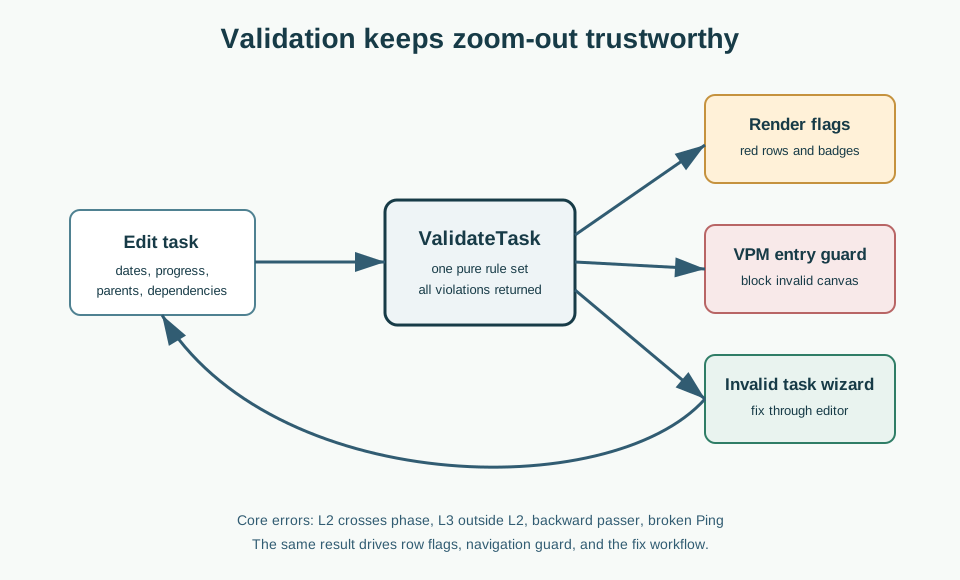
The most important validation rules are:
- L2 Deliverables and Milestones must fit inside one phase.
- An L2 cannot cross a gate boundary.
- L3 Actions must fit inside their parent L2 date range.
- L3 Actions do not carry predecessor or successor links; dependencies belong to L1/L2 governance items.
- Backward passers are flagged when a successor starts too early relative to its predecessor.
Invalid Task Set Wizard
When a project contains blocking structure errors, the VPM canvas does not render as if everything is fine. The user is routed to the Invalid Task Set Wizard.
The wizard lists each violation, the affected lane, the error, and action buttons such as Edit Task, Edit Deliverable, Edit Pred, or Edit Succ. Every fix uses the standard task editor, so there is one editing surface to learn.
The VPM view becomes available again when all blocking errors are resolved.
Why The Guardrail Matters
VPM loses its advantage if the same task can mean different things in different views. The validator prevents that drift. The row flags, VPM-entry guard, and wizard all read the same validation result, so the system does not disagree with itself.