Role of the Project Manager

The project manager in VPM is first a team leader and coach, not a status clerk. Great PMs keep the project aligned to intent and outcomes, not vanity metrics. They translate leadership expectations into clear team commitments, then translate delivery reality back to leadership with honesty and context.
They are also guardians of scope, resources, and change discipline. The PM protects the project contract: no one, including senior leaders, should be able to alter requirements informally without team visibility, impact assessment, and explicit agreement. This is not bureaucracy; it is how teams avoid hidden commitments and quiet schedule failure.
In daily operation, the PM protects people and performance at the same time. Team members often report through functional managers and can be over-committed. Strong PMs surface overload early, negotiate realistic capacity, and provide practical coaching when contributors are overwhelmed. They also maintain psychological safety so people can raise bad news early, ask for help, and recover quickly.
The PM is also the guardian of process quality. They ensure VPM is run as an operating system, not a checklist: real progress updates, real stand-up decisions, real follow-through, and real ownership of commitments. They recognize high contributors, reinforce accountability behavior, and build a team culture that solves problems together under pressure.
From Hero to Coach
Most project leaders earned the role as the technical hero — the person who could fix anything and got the applause for being the smartest in the room. The job then inverts. The work belongs to the team, and the leader's output is no longer what they personally build; it is the people and the system that build it. Leaders who keep solving everything themselves become the bottleneck every decision routes through, and they cap the project at one person's capacity. Leaders who let go build capacity that compounds.
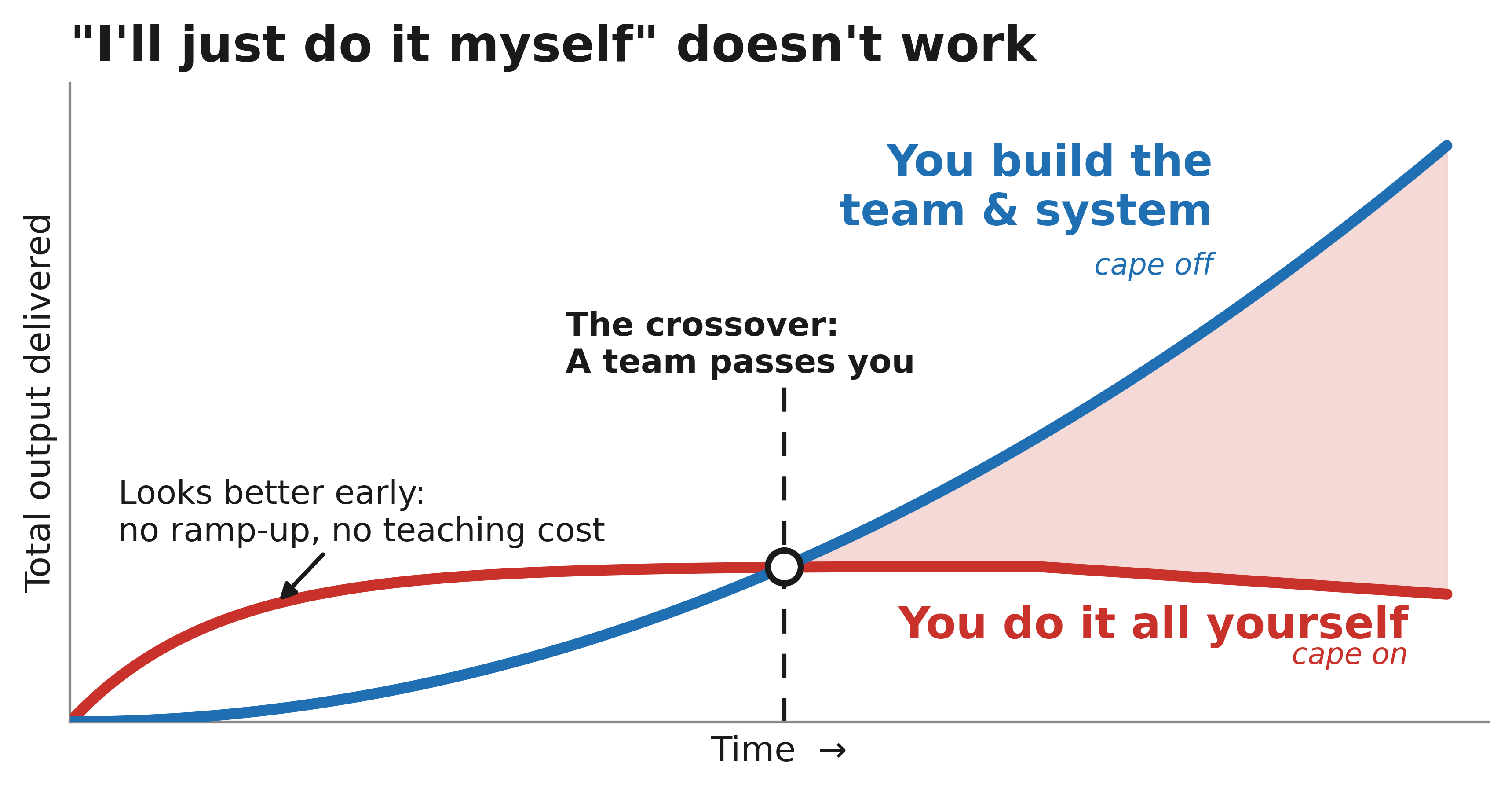
The shift shows up in small disciplines: handing over the decisions and not just the tasks, coaching the method instead of supplying the answer, measuring what the team can do without you, and flipping the credit so the team takes the bow. As Taiichi Ohno put it, "Let the flow manage the processes, and not let management manage the flow." The leader's job is to improve the flow, not to be it.
Avoid the "Excuse Factory" Pattern
One practical litmus test for PM leadership is simple: are we running an execution system, or are we running an excuse factory? If status meetings produce polished explanations but no changes in commitments, ownership, or countermeasures, schedule risk is already rising.
To prevent that drift, PMs should enforce four habits:
- Every red status must have a named owner, a near-term action, and a due date.
- Handoffs must be explicit commitments between roles, not implied assumptions.
- Stand-ups should end with decisions and follow-up actions, not narrative updates.
- Teams should measure delivered outcomes and flow reliability, not activity volume.
Four Additional Responsibilities Worth Calling Out
- Benefits realization partner: PMs should keep delivery tied to business value and support benefits tracking through transition, not stop at "feature complete."
- Governance and assurance owner: PMs run decision rhythm, reporting discipline, and assurance readiness so leaders can make timely, evidence-based decisions.
- Interdependency and risk integrator: PMs continuously manage cross-project interfaces and escalation paths, not just risks inside one lane.
- Learning-system leader: PMs ensure lessons learned are captured and applied during the project, not archived at the end and forgotten.
Why This Matters
When these responsibilities are done well, teams do not drift into silent delay. They maintain schedule integrity, preserve trust, and improve the probability that the project delivers both on-time outcomes and real business value.
Related Role: Project Administrator
On larger projects, many teams improve performance by adding a project administrator who handles daily execution logistics, meeting cadence, update discipline, and continuity when the PM is temporarily unavailable. This allows the PM to stay focused on leadership, escalation, and delivery decisions.
See Role of the Project Administrator.
References
- George Ellis, "Are You Running an Excuse Factory?" (LinkedIn companion article, May 19, 2026). Available in this wiki repository publications list and downloads.
- George Ellis, "Take Off the Cape: Why Your Best Engineer Becomes a Struggling Manager" (LinkedIn companion article, June 2026). On the shift from technical hero to team-building leader.
- UK Infrastructure and Projects Authority, Project Delivery Capability Framework (Version 3, December 2021), Project Manager / Director responsibilities, pp. 61-63.
- U.S. Government Accountability Office, Schedule Assessment Guide: Best Practices for Project Schedules (GAO-16-89G, December 2015), Best Practices 9-10 and recovery/acceleration, pp. 121-146.
- Project Management Institute, PMI Code of Ethics and Professional Conduct (effective November 17, 2025), Responsibility/Respect/Honesty sections, pp. 6-13.
- Association for Project Management, "What is change control?" (APM Body of Knowledge 8th edition definition and guidance), accessed April 12, 2026.
- Association for Project Management, "What is benefits management and project success?" (benefits realization and accountability context), accessed April 12, 2026.