VPM Stand-Up Meetings
VPM stand-ups are short, high-cadence operating drills used to keep the team aligned on real schedule health, not just task status.
Related: Project Scoreboard Beats a Newscast — the stand-up is where the team reads the scoreboard and calls the next play.
VPM stand-up meetings are short, focused sessions designed to maintain momentum, surface issues early, and keep teams aligned. Like Agile daily stand-ups, they are fast-paced (usually 15 minutes or less), happen at a regular time, and are intended to be lightweight. The key difference lies in the visual context: VPM stand-ups happen in front of a shared project visualization, such as a wallboard, whiteboard, or digital canvas that reflects current project status.
The structure is simple: each participant gives a brief update tied to the visual workspace - what is moving, what is blocked, and what is new. The goal is not detailed discussion or problem-solving; it is awareness, accountability, and fast feedback. Like a sailing crew checking conditions and adjusting course, these stand-ups help teams navigate ordinary changes - shifting priorities, new requests, and emerging risks - without losing sight of the bigger destination. Issues identified during the stand-up are captured visually and followed up outside the meeting, keeping the session focused and the team agile in the face of everyday unpredictability.
To be effective, VPM stand-ups must be sharp and fast-paced - almost like a well-drilled crew shift change. The goal is to move through the entire project landscape in 15 minutes, not to solve problems in real time. Discipline matters: once these meetings start to bloat with side conversations or deep dives, momentum fades. People stop seeing the value, start finding reasons to skip, and soon the meetings lack the quorum needed to make real-time decisions or surface cross-team dependencies. Brevity is not just a courtesy - it is what keeps the stand-up alive and useful.
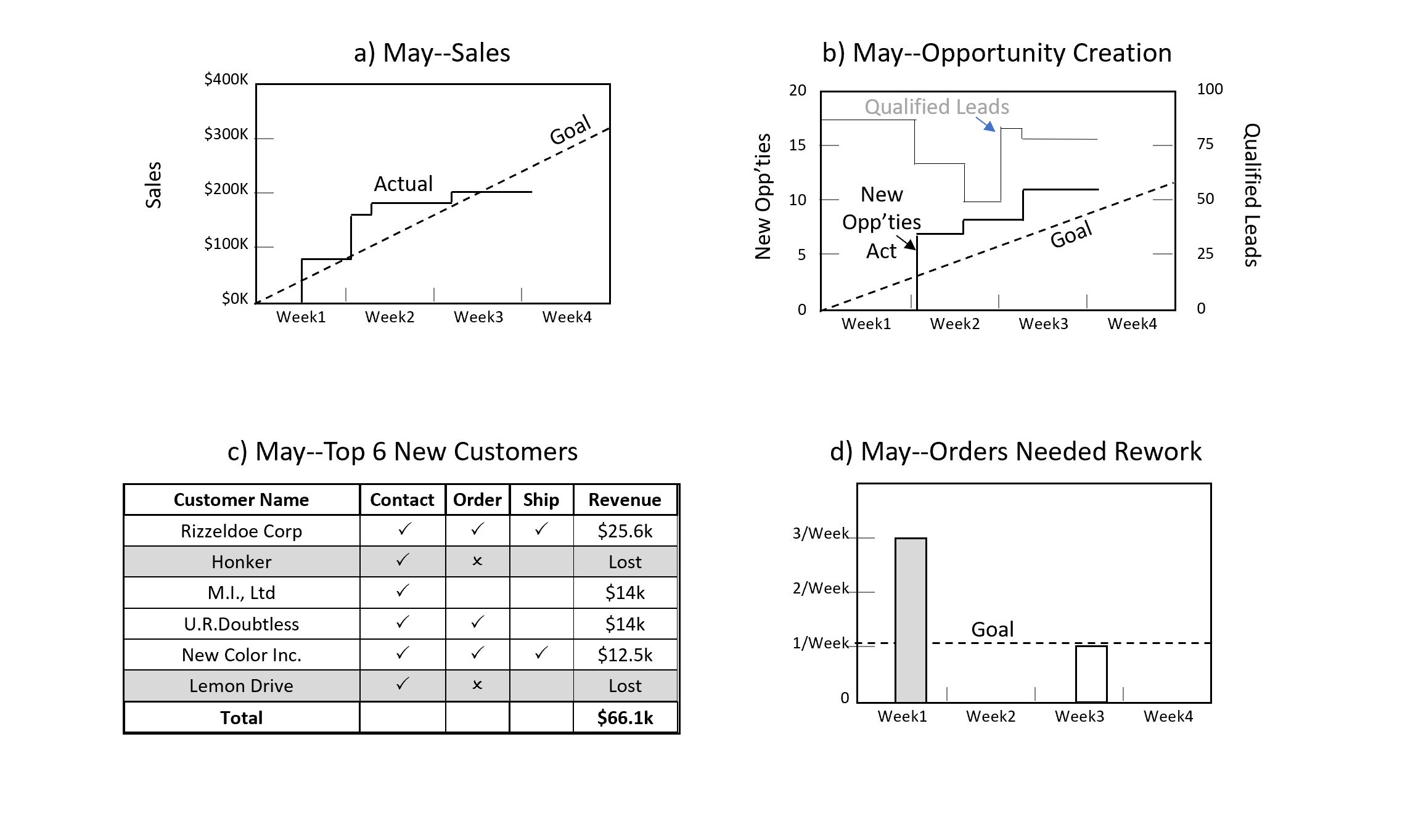
Example stand-up canvases: sheet, screen, and poster formats.
Core Objective
Every stand-up should answer three questions quickly:
- Where are we now against the plan?
- What is the first schedule risk that matters?
- What decision or action is needed today?
Target duration is usually 10-15 minutes.
Two Operating Modes
VPM uses two stand-up drills depending on project complexity:
| Mode | Best for | Primary signal |
|---|---|---|
| Unbuffered | Modest complexity, softer dates | Done line vs Today |
| Buffered | Higher uncertainty, harder dates | Fever chart and buffer burn |
Team Composition
The roster is centered on swim-lane owners.
- Core participants: lane owners accountable for active commitments.
- Delegates: temporary substitutes when a lane owner is absent.
- Support participants: specialists invited when a risk or dependency needs immediate input.
The stand-up is usually led by the project manager.
Core Team
The core team is made up of swim lane owners. These lanes are regularly called on to deliver work product throughout the project. That is why core members attend stand-ups consistently: they are accountable for lane commitments week after week.
- Core members attend regularly while their lane has active work.
- Core members are accountable for lane outcomes, even when they are not personally responsible for each individual task in the lane.
Delegates
Delegates are people who fill in for core team members on a temporary basis. If a core member cannot attend and the lane has active tasks, a delegate is required.
Delegates must be knowledgeable about the swim lane team's current work, blockers, handoffs, and timing changes. In practice, delegates are usually among the more senior members of the lane team.
Support Team
Support teams take direction from the core team. Support participants are responsible contributors inside swim lanes. They do the work in the lane but are not accountable for overall lane delivery.
Examples:
- In an EE lane, support members may include engineers and test contributors doing day-to-day design and validation work.
- Finance, Legal, and HR are often support lanes with occasional participation and usually do not require regular stand-up attendance.
- Support participants may appear in other lanes when needed, for example a patent attorney joining a design lane for a filing or Legal joining the PM lane to clear contract approvals.
Who Leads the Stand-Up
The stand-up is usually led by the project manager. In some cases, especially at project start or immediately after a major transition, product management may lead until the execution rhythm stabilizes.
Attendance, Behavior, and Delegation
Stand-up discipline is an execution asset, not a meeting preference. The team gets value only when the people with active commitments are present, prepared, and engaged.
Practical working expectations:
- Arrive ready to report actual progress, not optimistic projections.
- Keep updates concise and anchored to the visual canvas.
- Raise blockers early, especially when they affect successors in other lanes.
- Use delegates only when necessary and only when they can represent current lane reality.
- Record decisions on the shared canvas during the meeting, not afterward.
Meeting Format Rules
To preserve equal participation:
- Run either all-physical or all-virtual sessions.
- Avoid mixed-room plus speakerphone formats.
- In virtual mode, require camera-on participation for active contributors.
Hybrid attendance can work when designed intentionally, but it often degrades into side-channel conversations and delayed updates. If the team must run hybrid for a period, explicitly manage turn-taking, decision capture, and participation equity so remote contributors remain first-class participants.
Collocated vs Distributed Stand-Up Meetings
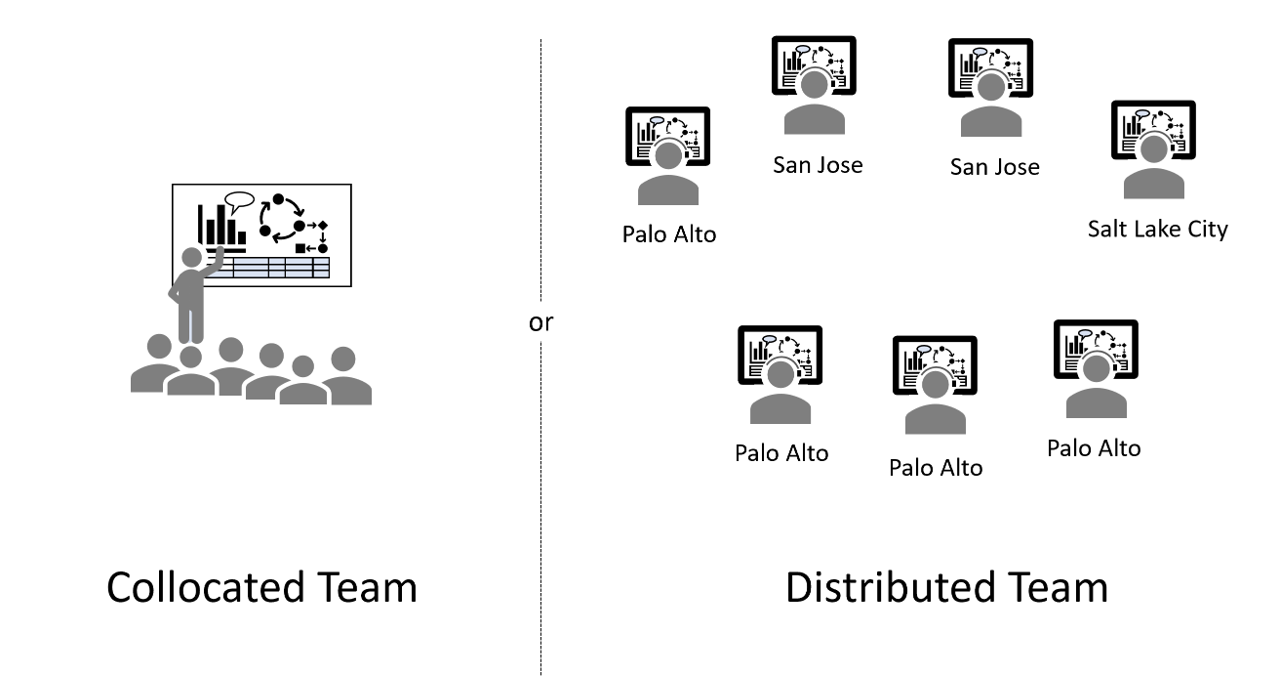
Figure: Collocated and distributed stand-up formats.
Both formats can work well when run with discipline:
- Collocated format works best when all active contributors can stand together at one visible canvas.
- Distributed format works best when every participant has equal on-screen access to the same live canvas.
What to avoid:
- A small in-room group speaking to remote participants on a passive speaker connection.
- Decisions made in side conversations after remote participants drop.
- Updating the visual board later instead of updating it during the meeting.
If the project is distributed, default to a fully distributed stand-up even when a few contributors share a physical office. Equal visibility and equal voice matter more than convenience.
Unbuffered Stand-Up Drill (4 Steps)
This drill is used for unbuffered projects. The team reacts directly to project dates becoming late and then runs plays to recover schedule performance.
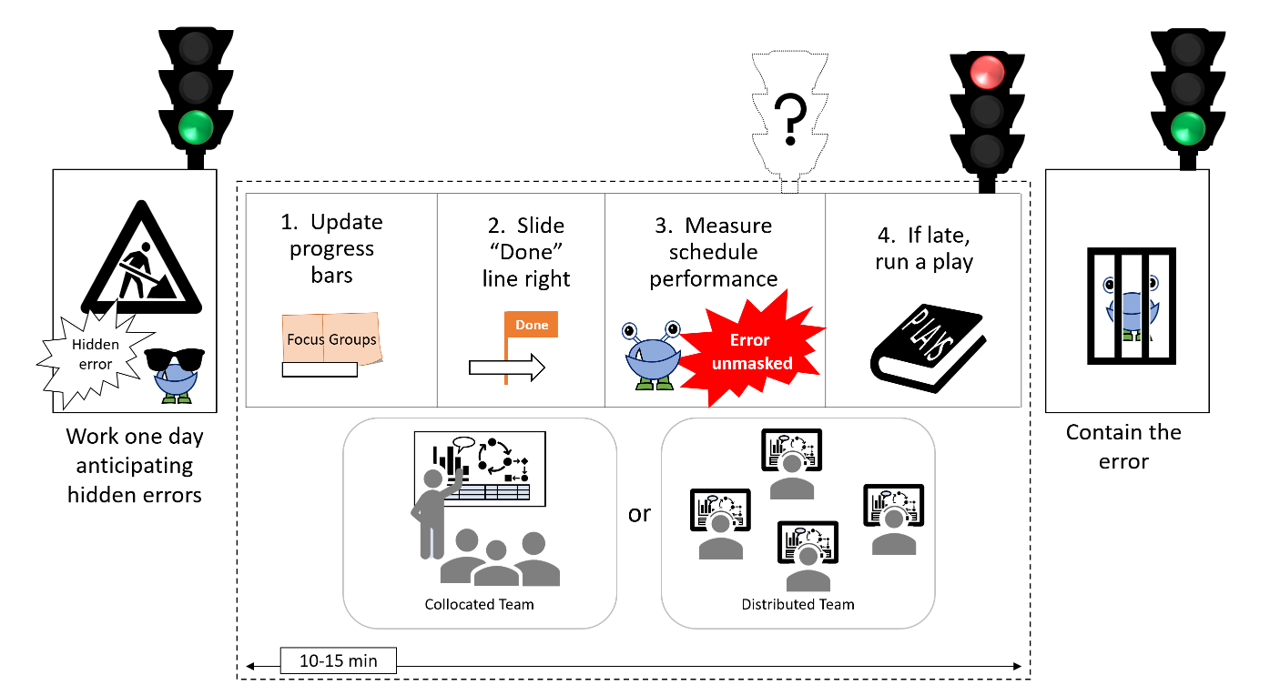
Figure: Four-step daily management stand-up workflow for unbuffered execution.
- Step 1: Update progress bars for active tasks.
- Step 2: Move the Done line to the rightmost feasible point.
- Step 3: Compare Done to Today.
- Step 4: If late, run a play immediately.
In unbuffered mode, a late condition is a Stop-Fix alarm.
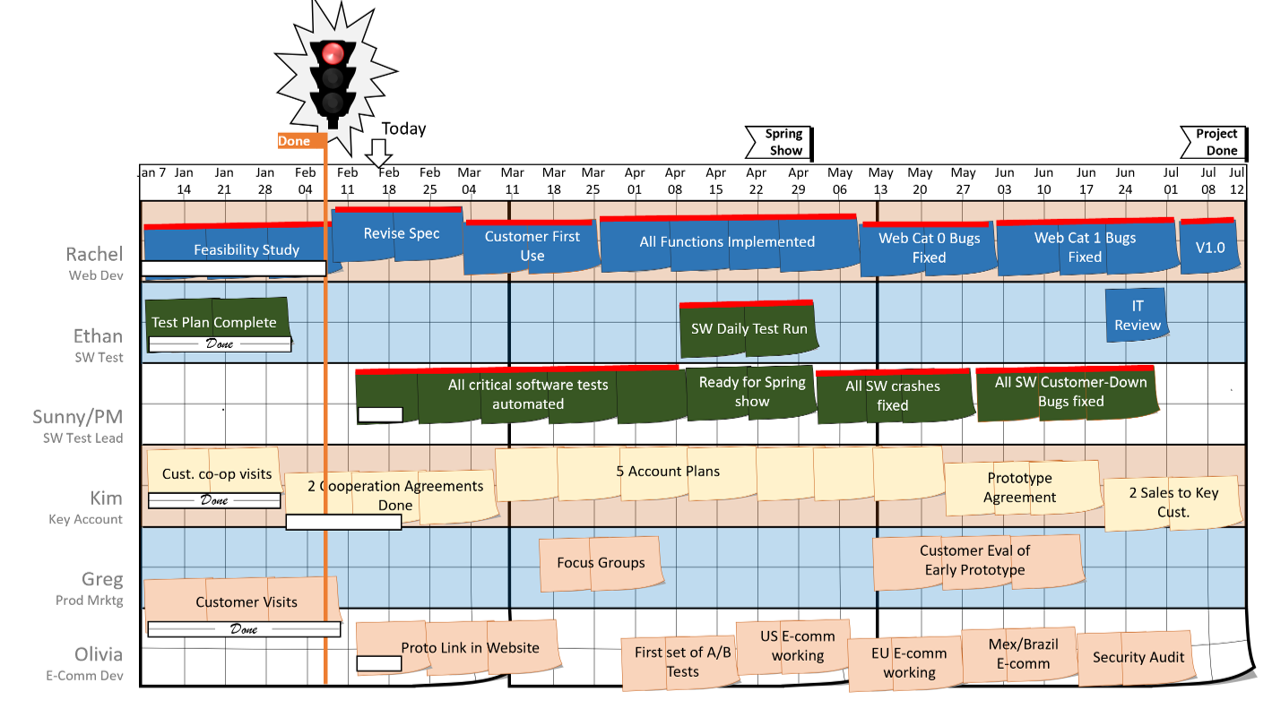
Figure: Unbuffered project shown late because Done is behind Today.
This is an immediate visual signal of late status: when the Done marker sits left of Today, the project is late and requires Stop-Fix action.
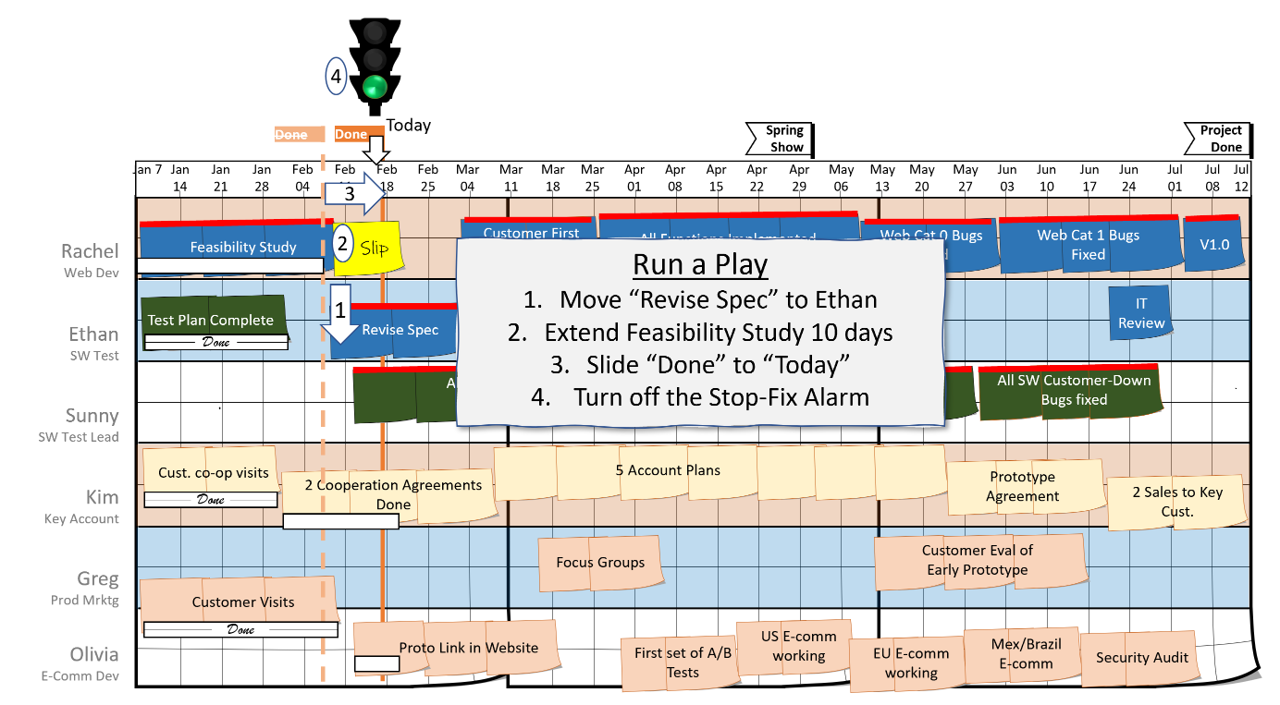
Figure: Unbuffered project after a play recovers delay and restores alignment.
After a successful play, the schedule is adjusted to recover delay and restore project health. This is how teams maintain on-time delivery. When done frequently, these plays are often small and have minimal impact on overall project flow.
Buffered Stand-Up Drill (6 Steps)
This drill is used for buffered projects. Instead of waiting for the project to go late, the team reacts to excessive buffer burn, which is a leading indicator of future schedule delay.
This highlights the core buffered tradeoff: better early warning, but greater complexity and lower intuition for teams that are new to the method. These tradeoffs are why unbuffered scheduling works well for simpler projects, while buffered scheduling is often better for more complex projects where teams have time to train and where delay patterns are more likely to be complex.
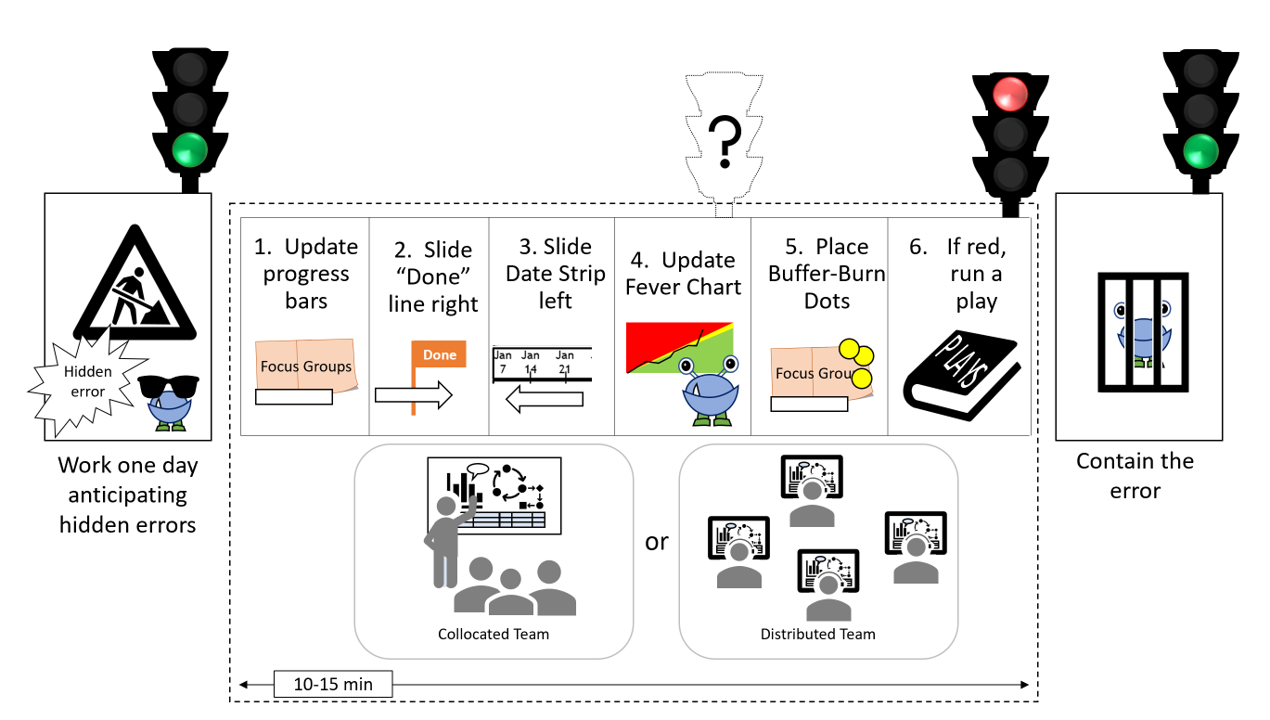
Figure: Six-step daily management stand-up workflow for buffered execution.
- Step 1: Update progress bars.
- Step 2: Move the Done line.
- Step 3: Shift date strip left if Done trails Today.
- Step 4: Plot consumed buffer on the fever chart.
- Step 5: Place delay dots on the task or tasks that consumed buffer.
- Step 6: If chart is red, run a play immediately.
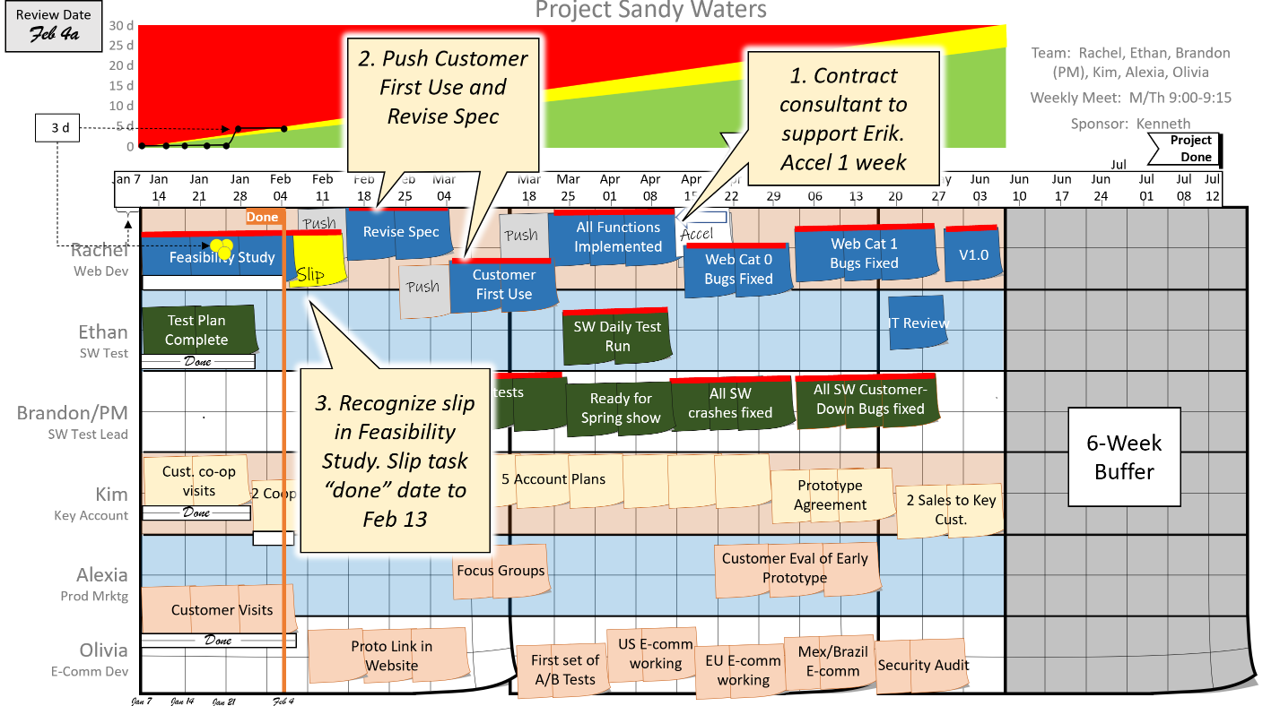
Figure: Buffered project view after a play is run to recover schedule performance.
Buffered mode gives smoother daily management while still forcing fast reaction when risk exceeds tolerance.
After the Stand-Up
The stand-up is for alignment and decisions, not deep problem-solving.
- Resolve simple issues in the meeting.
- Schedule focused follow-up sessions for complex issues.
- Confirm owner, deadline, and expected impact for each action.
This separation is essential: stand-up keeps the whole team synchronized, while targeted follow-up preserves speed without losing technical depth.
Cadence Guidance
Stand-up frequency in VPM should flex with the project's pace and pressure. Two or three times per week is often enough during steady progress, but when the project hits a rough patch - unexpected delays, technical blockers, or shifting goals - daily meetings may be essential. If a complex issue becomes central to progress, the team may need to bring in domain experts or decision-makers temporarily, ensuring the right people are in the room to move things forward. The key is responsiveness: adjusting the cadence and attendance to fit the moment, not sticking rigidly to a schedule that no longer serves the project's needs.
- Start with 2-3 times per week when project risk is stable.
- Increase to daily when yellow or red conditions appear.
- Keep the cadence high until risk returns to stable green operation.
Failure Patterns to Avoid
- Turning stand-ups into long technical reviews.
- Updating the canvas after the meeting instead of during the drill.
- Letting attendance drift on active lanes.
- Treating red conditions as "watch and wait" instead of "act now."
Another common failure mode is "reporting theater": the project manager maintaining a polished status view while lane owners are not using the canvas to run daily work. When this happens, ownership drops and issues surface late.